A grocery budget for a family of four that actually holds: the three numbers, and the takeaway leak
Set a weekly grocery budget for a family of four, catch the eating-out creep that hides a third of food spend, and cut food waste with three numbers checked every Sunday.
Ask a household what it spends on food and the answer is the grocery number. Add the pizza on Friday, the two café lunches, the coffee run, the Thursday takeaway because nobody planned dinner, and the real figure is often a third higher. That gap is why grocery budgets “never work”: the budget was for groceries and the spending was for food.
Three numbers fix it, checked once a week.
1. Groceries against a weekly budget
Monthly grocery budgets fail because the month is too long to correct. A weekly number is small enough to hold and short enough to reset. For a family of four eating mostly at home, weekly grocery spend commonly lands between $150 and $280 depending on region and diet; the right number is the one your last eight weeks of receipts say you can hit with one shop and one top-up, not the one an article suggests.
Two rules hold it. Shop once a week from a list written from the meal plan, and treat the mid-week top-up as the leak it is — it is where most budgets quietly go 20% over. Log every receipt the same day; a receipt logged on Sunday from memory is always smaller than the real one.
2. Eating out as a share of food spend
Give takeaways, restaurants, coffee and snacks their own weekly budget and track them separately. The number to watch is their share of all food money over the last four weeks. Under 15% is a treat working as a treat. Over 25% and the plan is losing to the delivery app.
The cause is nearly always the same: a planned dinner that did not get cooked. Which is why the meal plan matters less as a menu and more as a scoreboard — seven planned dinners, a tick for each one actually cooked. Plan adherence below about 75% predicts the eating-out overspend a week before it shows up on the card. The fix is not more discipline; it is easier dinners on the nights that always get skipped.
3. What went in the bin
Food waste is the cost nobody logs because logging it is unpleasant. Do it for one week — every item thrown out, with a rough cost — and two things happen: the number is bigger than expected (10–15% of grocery spend is common), and it is concentrated in a few items. The bagged salad that goes slimy, the half loaf, the herbs. Buy half as much of those, freeze the meat the day it is bought, and plan a leftovers night every week. Waste under 5% of groceries is a real saving that shows up in the grocery number without cutting anything anyone eats.
The Sunday check
One number: everything spent on food this week, groceries plus eating out. Then three questions. Did groceries hold the weekly line — and how many of the last eight weeks did not? What share of food money went to eating out, and how many planned dinners got cooked? What went in the bin, and which item keeps going there? Three colours, three tasks — log the receipts, plan seven dinners, write the list from the plan — and the week is set.
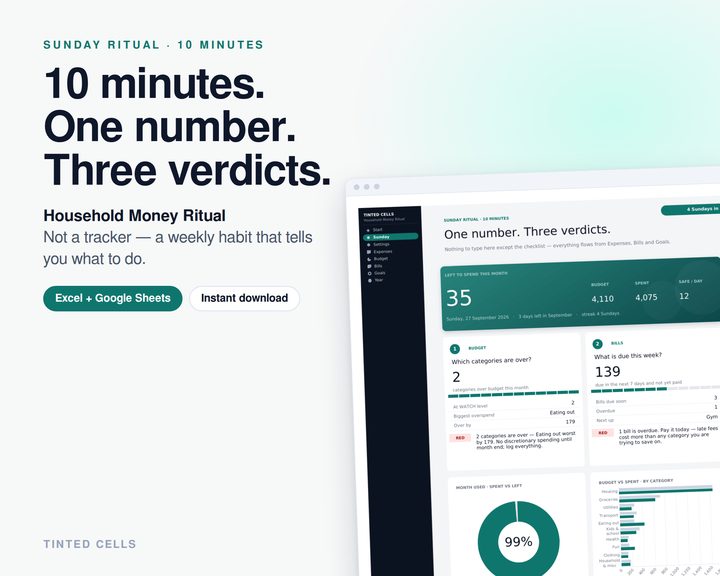
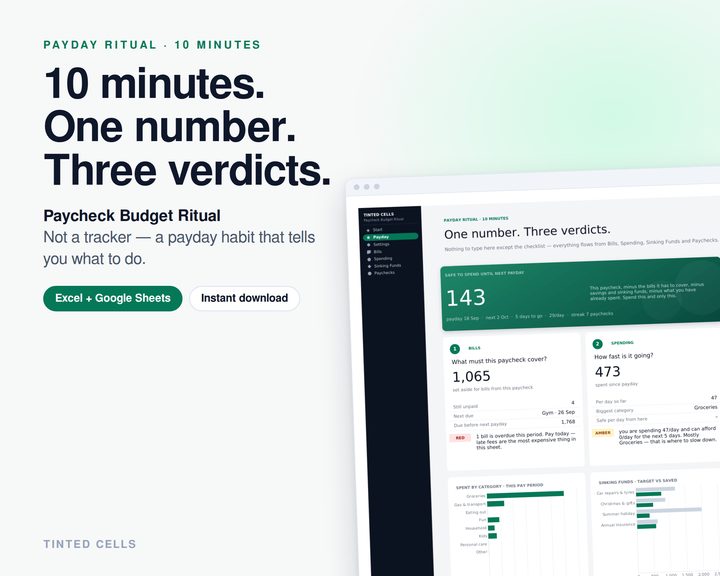
The Grocery & Meal Budget Ritual spreadsheet keeps the three numbers on one Sunday page: a receipts log with type, a seven-dinner plan with a cooked tick, a waste log, an eight-week view that marks every week OVER or held, and verdicts written as instructions. Sample data included for a fictional family of four so every page works before you start.
Start with the eating-out share. It is the number most families have never seen, and the one that explains the rest.