Budgeting by paycheck: why monthly budgets fail when you are paid every two weeks
Paid biweekly? A monthly budget breaks in the third week. Here is the paycheck budget method: assign every bill to the check that covers it and keep one safe-to-spend number.
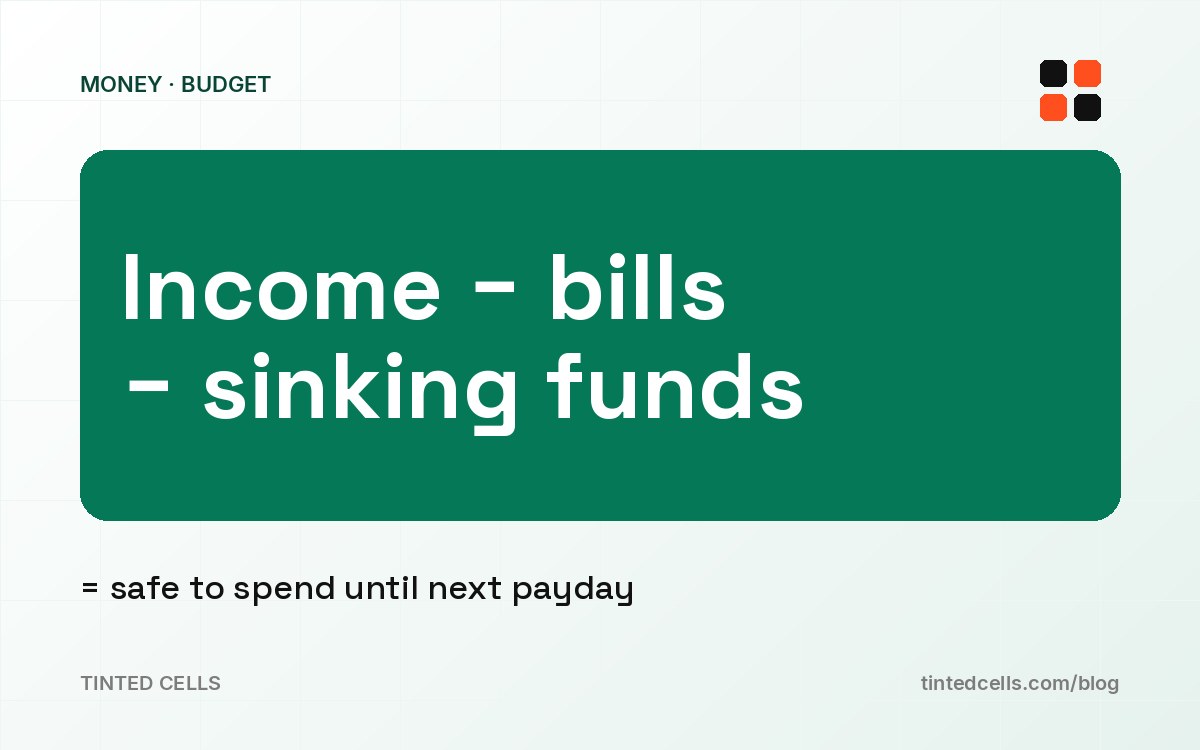
A monthly budget assumes money arrives once and bills leave gradually. For most people it is the other way round: money arrives in chunks every two weeks, and the bills cluster wherever the landlord and the utility company decided years ago. The result is a month that looks fine on paper and a third week where the account is empty and rent is still due.
The paycheck budget fixes the mismatch by planning at the same rhythm the money arrives.
The method in one sentence
Every bill is assigned to the paycheck that has to cover it, and what is left of that paycheck after its bills and savings is the only number you spend from until the next one.
That is it. Three parts, each with a rule.
Assign bills. List every bill with its due day. For each one, write which paycheck of the month pays it — usually the one that lands before the due date. If a paycheck ends up carrying too much (rent plus the car plus insurance all in the first half), you have two choices: move a due date by calling the company, which works more often than people think, or split large bills evenly across checks and hold the money aside. Either is fine. Not deciding is what fails.
Pay the future first. Savings and sinking funds — the car repair, the holiday, the annual insurance — get an amount per paycheck, not per month. A $600 bill due in six months is $50 per paycheck for twelve paychecks. Put it aside on payday and it stops being an emergency.
Compute safe-to-spend. Paycheck minus its bills minus savings minus anything already spent since it landed. Write the number where you will see it. When the spending log reaches it, stop. This one number replaces the whole category budget for most households, because the categories were only ever a way of guessing at it.
Weekly, biweekly, twice a month, monthly
The method works for any pay frequency, but two of them need care. “Biweekly” and “twice a month” are not the same: biweekly means 26 paychecks a year, and twice a year a month contains three of them. That third check is the best thing about being paid biweekly — it is not assigned to any bills. Decide in advance what it does (debt, savings, the holiday fund) so it does not evaporate.
Monthly pay works too; the method just collapses into a normal budget with a clearer number at the end.
The three checks on payday
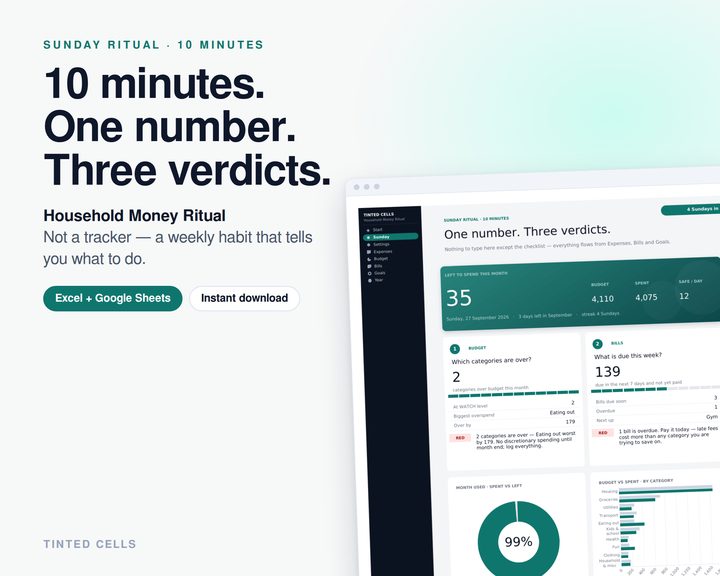
Once the plan exists, payday takes ten minutes. Three questions, three colours.
Bills — is every bill this check covers paid or scheduled? If not, schedule it now, before the money is spent on anything else. Spending — will the safe-to-spend number last until the next check at the current pace? If the log is already at 70% of it with a week to go, this is the moment to know. Savings — did the future get paid? If the transfer did not go, send it now; the account will not do it later.
The Paycheck Budget Ritual spreadsheet runs this for any frequency: you type how you are paid and one recent payday, list bills with due days, and the sheet lands each bill on the check that covers it — or splits it evenly, your choice — and shows safe-to-spend per period, with a Payday page of three verdicts. The Paycheck Budget Binder does the same on paper: four paycheck pages a month and a bills-by-paycheck sheet.
Start with the bill list. Assigning each one to a paycheck takes fifteen minutes and is the part that stops the third-week surprise.